Jambalaya
Jambalaya
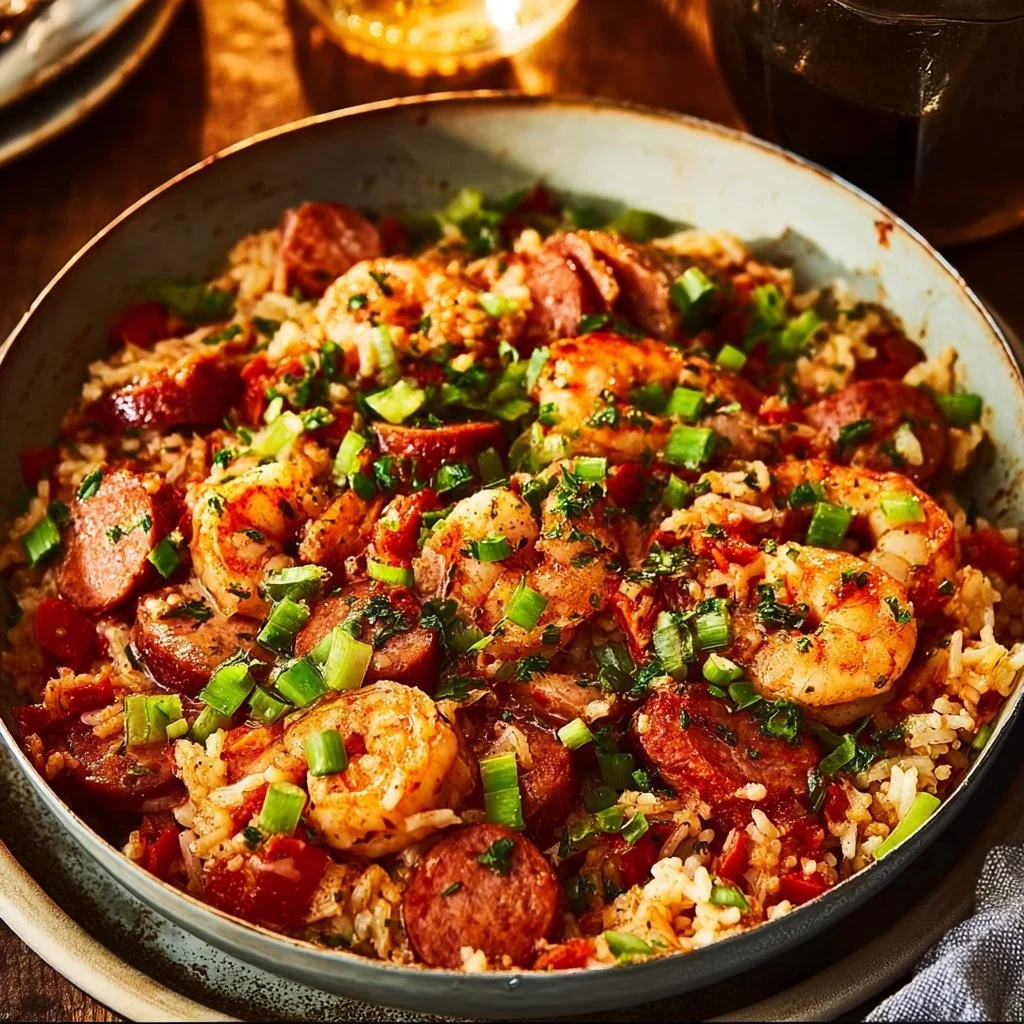
Jambalaya is a rich and flavorful dish that beautifully represents the melting pot of cultures in Louisiana. This classic Creole dish combines Spanish, French, and African influences to create a stunning one-pot meal ideal for gatherings. The vibrant medley of spices, proteins, and rice creates a dish that not only satiates but also tells a story of region and tradition. Imagine sitting down with family and friends, immersed in the warm, colorful aromas wafting from the pot, as you all anticipate the burst of flavors that awaits.
What Makes This Recipe Stand Out
Jambalaya stands out for various reasons that appeal to both home cooks and food enthusiasts. First, its versatility is noteworthy; you can tailor the ingredients to suit your preferences or what you have on hand. Chicken, shrimp, and sausage combine in a delightful mélange, but feel free to experiment with your favorite seafood or meats. Alongside its adaptability, this dish delivers an explosion of flavors with each bite. The combination of Cajun seasoning, garlic, and the aromatic trinity of onion, bell pepper, and celery creates a symphony of tastes that engage the palate.
Additionally, the cooking method is both simple and efficient. As a one-pot dish, Jambalaya minimizes cleanup while maximizing flavor. This practical aspect makes it an excellent choice for weeknight dinners or gatherings. Besides that, Jambalaya has a unique ability to evoke memories and create connections among those who enjoy it. It’s not just a meal; it’s an experience that brings people together, making it a staple at celebrations, family reunions, and casual dinners alike.
Lastly, each serving of Jambalaya is packed with nourishing ingredients, offering protein from meats and vitamins and minerals from vegetables. Therefore, it provides a well-rounded meal that can satisfy even the heartiest of appetites. With its fascinating history and comforting flavor profile, it’s no wonder that Jambalaya remains a beloved dish across the globe.
Ingredient Breakdown
Before diving into the preparation, it’s essential to understand the critical components that make up this delightful dish:
- Vegetable Oil: Provides the fat needed for sautéing the ingredients and adds richness to the dish.
- Chicken: Offers lean protein and contributes a robust flavor, enhancing the dish’s heartiness.
- Andouille Sausage: This smoked sausage brings a kick of spice and a delightful smokiness, deepening the dish’s complexity.
- Onion, Bell Pepper, and Celery: Known as the “holy trinity” in Cajun and Creole cooking, these vegetables provide foundational flavors.
- Garlic: Adds a pungent aroma that elevates the flavor profile of the entire dish.
- Canned Diced Tomatoes: Instills moisture and acidity, cutting through the richness to create a well-balanced dish.
- Chicken Broth: Serves as the cooking liquid, infusing the rice with flavor.
- Cajun Seasoning: A blend of spices that imparts the quintessential flavors associated with Louisiana cooking.
- Thyme: Adds an earthy note, rounding off the dish’s herbaceous backdrop.
- Rice: Acts as the base, absorbing all the wonderful flavors of the dish.
- Shrimp: Provides a fresh taste and a tender texture that complements the other ingredients beautifully.
- Salt and Pepper: Essential for enhancing the flavors and bringing the dish together.
- Sliced Green Onions: Used as a garnish, adding a pop of color and a fresh crunch.
As you can see, these ingredients each play a vital role in crafting a bowl of Jambalaya that is not just food but an experience.
| Ingredient | Role |
|———————|————————————-|
| Vegetable Oil | Sautéing and flavor richness |
| Chicken | Lean protein |
| Andouille Sausage | Smokiness and spice |
| Onion, Bell Pepper, Celery | Flavor foundation |
| Garlic | Pungent aroma |
| Canned Diced Tomatoes| Moisture and acidity |
| Chicken Broth | Flavor infusion |
| Cajun Seasoning | Signature spice blend |
| Thyme | Earthy note |
| Rice | Base layer absorbing flavors |
| Shrimp | Fresh taste, tender texture |
| Salt and Pepper | Flavor enhancer |
| Sliced Green Onions | Garnish and freshness |
Step-by-Step Preparation for Jambalaya
Step One
To begin, heat the vegetable oil in a large pot over medium heat. The oil should shimmer, indicating readiness. This step is crucial as it prepares the base for sautéing and helps develop the dish’s initial flavors. Once the oil is hot, add the diced chicken and andouille sausage. Sauté the meat until browned, approximately 5 to 7 minutes. Stirring occasionally is important to ensure even cooking. Browning the meats not only elevates their flavors but also provides a rich foundation for the rest of the ingredients. The delightful aroma will start filling your kitchen, setting the scene for this culinary adventure.
Step Two
Next, it’s time to introduce the aromatic vegetables—the chopped onion, bell pepper, celery, and minced garlic. Add these veggies to the pot and cook until they soften, which usually takes about 4 to 5 minutes. It’s essential to stir frequently, ensuring everything melds together harmoniously. The release of moisture from the vegetables will deglaze the pot, lifting any flavorful bits stuck to the bottom from the chicken and sausage. This step enriches the overall flavor profile and enhances the dish’s depth. As the vegetables soften, they’ll add sweetness and complexity, rounding out the heartiness of the meats.
Step Three
Now, pour in the canned diced tomatoes along with the chicken broth. These ingredients will form the liquid backbone of your dish, so ensure they’re well incorporated. Following this, add the Cajun seasoning, thyme, and rice to the mix. Stir everything together to ensure the rice is evenly coated and immersed in the flavorful liquids. It’s critical to bring the mixture to a boil, which typically requires a few minutes. Once boiling, reduce the heat to low, cover the pot, and allow it to simmer. This gentle cooking process will help the rice absorb the flavors and become tender, around 20 to 25 minutes. The scent circulating in your kitchen will be nothing short of enticing.
Step Four
After the rice has absorbed most of the liquid and is cooked through, it’s time to introduce the shrimp. Add the shrimp to the pot, gently folding them into the mixture. Cook for an additional 5 minutes until the shrimp turn pink and opaque. This quick cooking method preserves the shrimp’s tender texture while infusing it with the dish’s robust flavors. Before serving, taste and season the Jambalaya with salt and pepper as necessary. Once plated, garnish with fresh slices of green onion for a burst of color and crunch. Your culinary masterpiece is now ready to be shared and enjoyed! 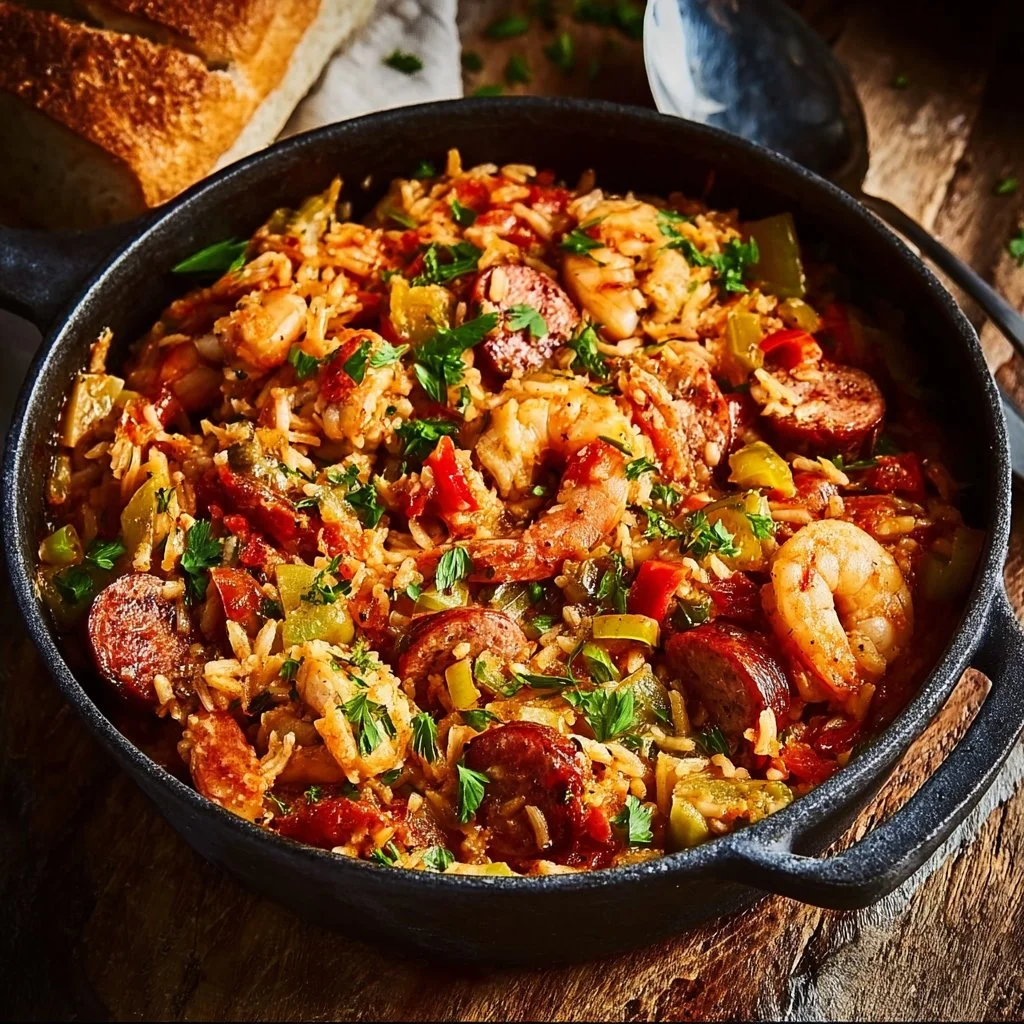
Full Cooking Directions
To embark on this flavorful journey, begin by heating vegetable oil in a large pot over medium heat. It’s crucial to allow the oil to reach the right temperature before adding any ingredients. Next, add the diced chicken and Andouille sausage to the pot, cooking them until they achieve a golden brown exterior. This step adds a rich flavor profile to the meat while enhancing the dish’s overall depth.
Once the browning is complete, introduce the chopped onion, bell pepper, celery, and minced garlic to the pot. Stir these ingredients together, cooking them until they soften. This mixture, often referred to as the “holy trinity” of Cajun cooking, will help build a beautifully aromatic base for the Jambalaya.
After the vegetables have softened, it’s time to layer in even more flavor. Pour in the canned diced tomatoes and chicken broth, stirring well to combine. When the liquid is evenly incorporated, add the Cajun seasoning, thyme, and rice to the pot. Bring everything to a rolling boil, and once you achieve that boil, reduce the heat to low and cover the pot. This simmering process will allow the rice to absorb all those incredible flavors while cooking to tender perfection.
After about 20 to 25 minutes, check the rice for doneness. If it’s ready, fold in the shrimp and let them cook until they turn pink and opaque, about five more minutes. Finally, season with salt and pepper to taste, and garnish your stunning dish with slices of green onions. The final Jambalaya is a beautiful array of colors and textures, enticing not only the eyes but the palate as well.
Pro Tips & Extra Guidance
To elevate your Jambalaya game, consider the following helpful tips:
-
Choose Your Protein Wisely: While chicken and Andouille sausage are traditional, you can easily customize your choice of proteins. Try substituting or adding seafood like scallops or crab for a delightful twist.
-
Spice Level: The intensity of Cajun seasoning can vary greatly, so feel free to adjust the amount to suit your personal preference. If you’re unsure, start with a smaller amount and taste as you go.
-
Rice Type: Long-grain rice is preferred for this dish, as it holds its shape well during cooking. Avoid using quick-cook rice or overcooking; this can lead to a mushy texture.
-
Vegetable Additions: Incorporate other vegetables such as okra, zucchini, or peas to enhance both the visual appeal and nutritional value of your Jambalaya.
-
Make Ahead: Jambalaya tastes even better the next day. Consider making it a day in advance; just reheat gently to bring it back to life.
-
Texture Balance: Pay attention to the cooking times for different proteins. Shrimp cooks quickly, so add them to the pot just before serving to ensure they remain tender and juicy.
Best Practices for Storing & Reheating
To preserve the integrity and flavor of your Jambalaya, consider the following storage and reheating practices:
-
Storing: Once your Jambalaya has cooled to room temperature, transfer it to an airtight container. It can safely be stored in the refrigerator for up to 3-4 days. For longer storage, consider freezing portions in freezer-safe bags or containers, where it will maintain quality for up to 3 months.
-
Reheating: When ready to enjoy your leftover Jambalaya, it’s best to do so gently to avoid overcooking the shrimp. Reheat it on the stovetop over medium heat. You may want to add a splash of chicken broth or water to help restore moisture as it reheats. Stir occasionally until thoroughly heated. Alternatively, you can use the microwave; heat it in short intervals, stirring frequently to ensure even warming.
By following these practices, you can maintain the dish’s quality and flavor for future enjoyment.
Common Questions Answered
What is the origin of Jambalaya?
Jambalaya is rooted primarily in Creole and Cajun cuisine from Louisiana. Influences stem from Spanish, French, and African culinary traditions, reflecting the region’s rich cultural history.
Can I make Jambalaya vegetarian?
Absolutely! Simply replace the meat with plant-based proteins, such as tempeh or tofu, and use vegetable broth instead of chicken broth. You can bulk up the dish with additional vegetables or legumes.
Is it possible to cook Jambalaya in a rice cooker?
Indeed, you can prepare Jambalaya in a rice cooker. Adjust the cooking times and water ratios according to your rice cooker’s specifications, and use it as a substitute for the stovetop method.
How do I know when the rice is cooked?
The rice is ready when it has absorbed most of the liquid and is tender but not mushy. You can taste-test it for doneness before adding the shrimp.
Is Jambalaya spicy?
The level of spice in Jambalaya largely depends on the Cajun seasoning and type of sausage used. If you prefer a milder dish, start with less seasoning and use a milder sausage.
How can I enhance the flavor of my Jambalaya?
Consider marinating your chicken in some Cajun spices or lemon juice before cooking. Alternatively, allow your dish to sit after cooking; the flavors develop more intensely over time.
Can I use leftover Jambalaya for other meals?
Yes! Leftover Jambalaya can be repurposed in various ways, from stuffing in bell peppers to creating a creamy Jambalaya casserole. The possibilities are endless.
Final Thoughts + Call to Action
Jambalaya is more than just a dish; it’s a celebration of flavors, cultures, and community. This hearty meal is perfect for any occasion, and with its myriad of variations, there’s always room for creativity in the kitchen. So why not gather your family and friends, and embark on this culinary adventure together? Prepare a pot of Jambalaya that is not just filling but comforting, invoking the sense of warmth that comes from sharing good food and even better company. Jambalaya is waiting for you to explore its depths and enjoy the enticing stories it has to tell. Grab your ingredients and start cooking today!
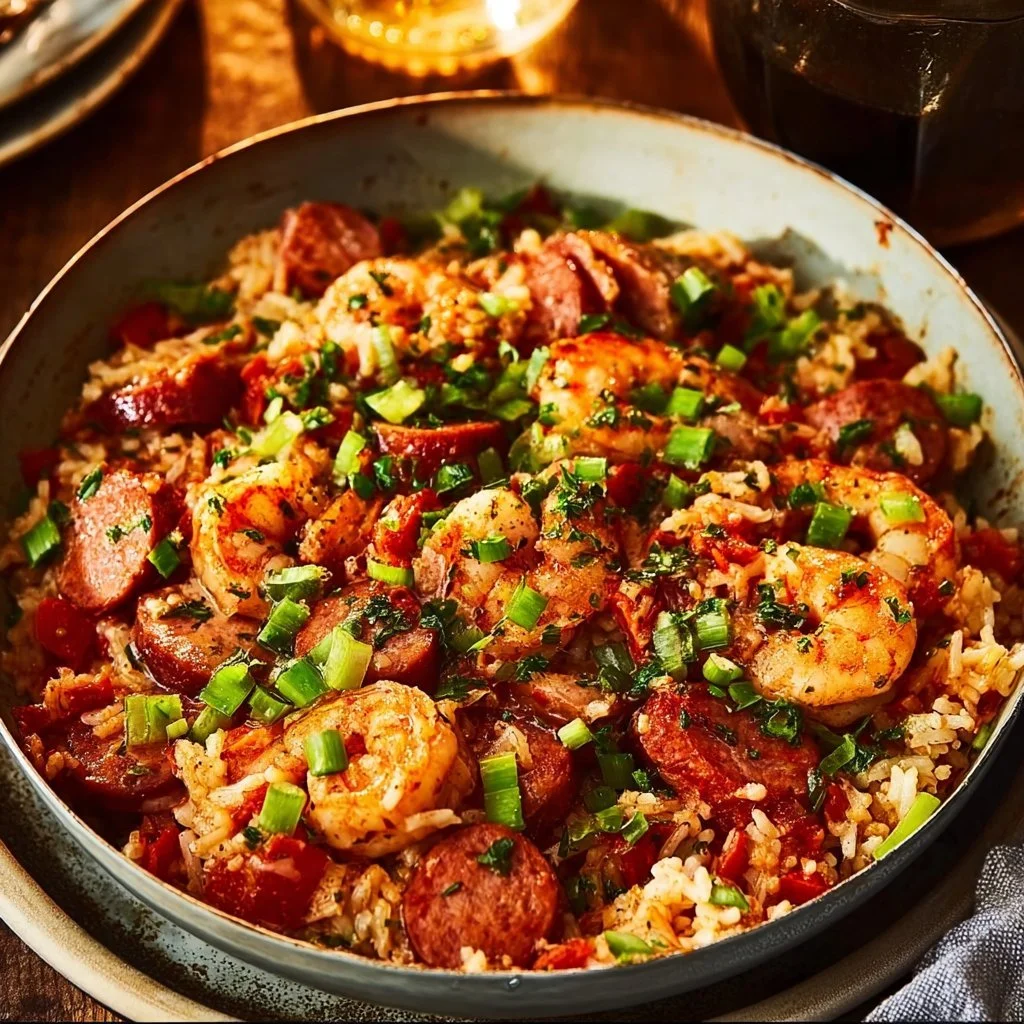
Jambalaya
Ingredients
Method
- Heat the vegetable oil in a large pot over medium heat.
- Add the diced chicken and andouille sausage, sauté until browned for about 5 to 7 minutes, stirring occasionally.
- Introduce the chopped onion, bell pepper, celery, and minced garlic, cooking until softened for 4 to 5 minutes.
- Add the canned diced tomatoes and chicken broth, mixing well.
- Stir in the Cajun seasoning, thyme, and rice, bringing the mixture to a boil.
- Once boiling, reduce the heat to low, cover the pot, and let simmer for 20 to 25 minutes.
- Fold in the shrimp and cook for an additional 5 minutes until they turn pink and opaque.
- Season with salt and pepper to taste, and garnish with sliced green onions before serving.